
If you’re running a small business in the US and wondering whether to hire a bookkeeper — or what it’s going to cost you — you’re not alone. Bookkeeping is one of those things that every business owner knows they need, but few know how to price or compare. This guide breaks down exactly what bookkeeping costs in 2026, what affects the price, and how to know whether you’re getting good value.
What Factors Affect Bookkeeper Pricing?
Bookkeeping costs are not one-size-fits-all. Before quoting a number, any serious bookkeeper will want to understand your business — and these are the key factors that drive the price:
1. Transaction Volume
The more transactions your business processes each month — sales, expenses, invoices, payroll runs — the more time bookkeeping takes. A business with 50 transactions per month will cost significantly less to maintain than one with 500.
2. Business Structure
Sole proprietors are the simplest to manage. LLCs, S-Corps, and multi-member partnerships involve more complexity — payroll, equity tracking, and K-1 schedules all add time and cost.
3. Industry
E-commerce businesses (with inventory, sales tax in multiple states, and marketplace fees) tend to cost more to bookkeep than a simple service-based business. Construction and real estate also add complexity through job costing and depreciation schedules.
4. Current State of Your Books
If your books are a mess — months or years behind, accounts unreconciled, expenses miscategorized — most bookkeepers will charge a one-time cleanup fee before starting ongoing work. This can range from a few hundred dollars to several thousand, depending on how far behind you are.
5. Software Platform
Whether you’re using QuickBooks, Xero, Zoho Books, FreshBooks, or something else affects pricing too. Some bookkeepers charge more for certain platforms, or charge setup fees to migrate you from one system to another. Not sure which platform to choose? Read our guide: QuickBooks vs Xero for US small businesses.
6. Frequency of Reporting
Monthly bookkeeping is standard. If you need weekly updates, daily transaction categorization, or real-time dashboards, expect to pay more.
How Much Does a Bookkeeper Cost Per Month?
Here’s a realistic breakdown of what you’ll pay depending on the type of bookkeeper you hire:
Freelance Bookkeeper
$20 – $50 per hour | $200 – $800/month on average
Freelance bookkeepers on platforms like Upwork, Thumbtack, or local directories typically charge by the hour. For a small business with 50–100 transactions per month, you might need 4–10 hours of work, putting your monthly cost between $200 and $500. The downside: quality and reliability vary widely, and if your freelancer is sick or unavailable during tax season, you’re stuck.
Local Bookkeeping Firm
$400 – $1,500/month
Established bookkeeping and accounting firms tend to bundle services — reconciliation, reporting, payroll — into monthly packages. You’re paying for reliability and accountability, but overhead costs mean higher rates. For most small businesses, $600–$900/month is a realistic ballpark for a basic monthly package from a local firm.
Remote / Online Bookkeeping Service
$99 – $500/month
Remote bookkeeping services have become the fastest-growing option for US small businesses, and for good reason. By operating entirely online, they eliminate office overhead and pass the savings directly to clients. Services like Cloud Accountants start at $99/month and scale based on transaction volume and services included. You get the same quality as a local firm — reconciled accounts, monthly P&L, balance sheet — delivered digitally, on time.
In-House Bookkeeper (Employee)
$45,000 – $55,000/year ($3,750 – $4,600/month)
Hiring a full-time bookkeeper as an employee is by far the most expensive option. Beyond the salary, you’re paying employer payroll taxes (roughly 7.65%), health insurance, paid time off, and equipment. For most small businesses, this only makes sense when you’re processing enough transactions (typically $2M+ in annual revenue) to justify a dedicated hire.
What Should Be Included in Bookkeeping Services?
When comparing quotes, make sure you’re comparing apples to apples. A quality bookkeeping service — at any price point — should include:
- Monthly bank and credit card reconciliation — matching your bank statements to your records so nothing slips through
- Transaction categorization — every expense correctly classified so your tax return is accurate
- Accounts payable and receivable tracking — so you know who owes you money and when bills are due
- Monthly Profit & Loss (P&L) statement — your revenue minus expenses, showing whether you’re actually making money
- Balance sheet — a snapshot of your assets, liabilities, and equity at month-end
- Year-end close — clean, tax-ready books delivered to your CPA in January
Watch out for services that advertise low monthly prices but charge separately for reconciliation, reporting, or payroll — the add-ons can quickly push the true cost above a more transparent all-inclusive package.

Is Hiring a Bookkeeper Worth the Cost?
The short answer: almost always, yes — especially for businesses generating more than $5,000/month in revenue.
Your Time Has a Dollar Value
If you’re spending 5–10 hours per month doing your own books, and your time is worth $100/hour, you’re spending $500–$1,000 worth of your own capacity on work that a professional bookkeeper can handle for $99–$300/month. You come out ahead financially, and you get your hours back to focus on revenue-generating work.
Errors Are Expensive
Miscategorized expenses, missed deductions, incorrect payroll tax deposits — bookkeeping mistakes have real financial consequences. The IRS charges penalties for late or inaccurate payroll tax deposits, and unclaimed deductions are money left on the table at tax time. See our full guide to US small business tax deadlines to understand what’s at stake.
Clean Books Make Everything Faster
Getting a bank loan? Investors will want to see your financials. Filing your taxes? Your CPA will charge less if your books are clean. Selling your business? Buyers require auditable records. Clean books, maintained consistently throughout the year, are a business asset — not just a compliance requirement.
Cloud Accountants Pricing for US Small Businesses
At Cloud Accountants LLC, we offer transparent, flat-rate monthly bookkeeping plans for US small businesses — with no surprise fees.
- Starter — $99/month: Monthly bookkeeping, bank reconciliation, P&L and balance sheet, up to 100 transactions. Best for freelancers and micro-businesses.
- Standard — $249/month: Weekly bookkeeping, payroll support for up to 5 employees, sales tax filing, monthly financial review call. Best for growing businesses.
- Premium — $499/month: Daily bookkeeping, payroll for up to 15 employees, federal and state tax filing, priority support. Best for established small businesses with complex needs.
All plans include certified QuickBooks ProAdvisor and Xero Certified Advisor support, fully remote delivery, and monthly reports delivered on time — every month.
Frequently Asked Questions
Can I do my own bookkeeping to save money?
Yes, but it’s rarely worth it once your business reaches $5,000–$10,000/month in revenue. The time cost, error risk, and tax implications of DIY books typically outweigh the savings. QuickBooks and Xero are good tools if you’re committed to learning them — see our QuickBooks vs Xero comparison to decide which fits your business.
How much does bookkeeping cost for a startup?
Startups with low transaction volumes can typically find quality bookkeeping services for $99–$199/month. The key is to start with clean books from day one — it’s much cheaper to maintain accurate records from the beginning than to pay for a cleanup later.
What’s the difference between a bookkeeper and an accountant?
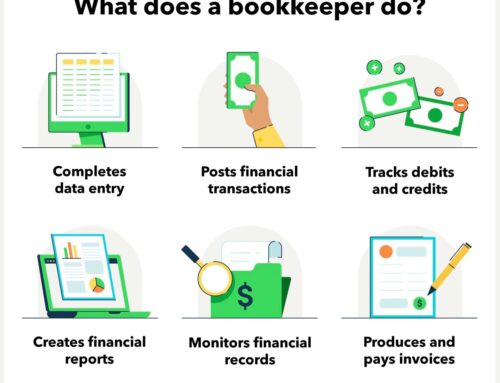
A bookkeeper records, categorizes, and reconciles your financial transactions month-to-month. An accountant (or CPA) analyzes those records to prepare tax returns, provide strategic financial advice, and conduct audits. You typically need both: a bookkeeper to maintain your records throughout the year, and an accountant or CPA to file your annual return.
Do remote bookkeepers really work?
Yes — and they’ve become the preferred option for thousands of US small businesses. Remote bookkeeping services access your accounts through secure cloud platforms like QuickBooks Online or Xero, meaning no in-person meetings or paperwork are required. You get the same quality of work, often at a lower price, because the service isn’t paying for office space in your city.
Is bookkeeping tax-deductible for a small business?
Yes. Bookkeeping and accounting fees paid for your business are fully deductible as ordinary and necessary business expenses under IRS guidelines. That means a $99/month bookkeeping plan costs you less in real terms after the tax deduction is applied — typically 20–37% less, depending on your effective tax rate.
Bottom Line
For most US small businesses, quality remote bookkeeping costs between $99 and $500 per month — far less than in-house staff, and far more reliable than doing it yourself. The right choice depends on your transaction volume, business complexity, and how much of your own time you want to reclaim.
Schedule Your Free Consultation →
Related Reading
- QuickBooks vs Xero for US Small Businesses: Which Is Better in 2026?
- US Small Business Tax Deadlines 2026: The Complete Calendar
- Our Bookkeeping Services →
- Frequently Asked Questions →
Cloud Accountants LLC is a Colorado-registered remote bookkeeping and accounting firm serving small businesses across the United States. We are QuickBooks ProAdvisor certified and Xero Certified Advisors. All services are delivered fully remotely.